Exploring the Intangible Heritage of Guangxi Zhuang Brocade and Embroidered Balls
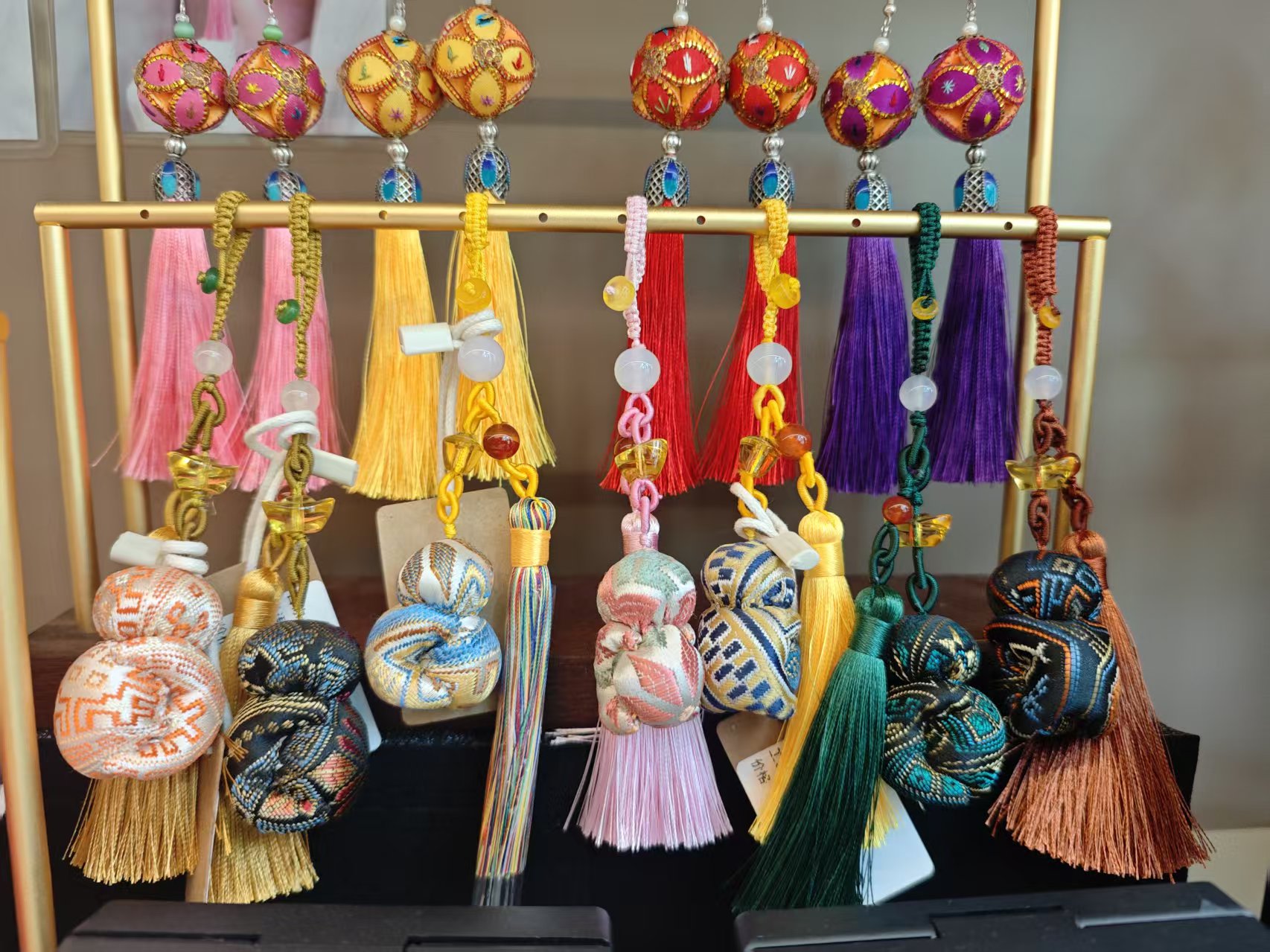
An Exploration of the Intangible Heritage of Guangxi Zhuang Brocade and Embroidered Balls
Zhuang brocade and embroidered balls are representative intangible heritage handicrafts of Guangxi, carrying a millennium of Zhuang folk beliefs and aesthetic traditions. Both combine craft value, cultural depth and heritage tourism experiences, while the accompanying ethnic silver ornaments complete a full system of minority craftsmanship.
I. Cultural Position, Patterns and Weaving Craft of Zhuang Brocade
Zhuang brocade ranks among the four famous brocades of China and is the only one named after an ethnic minority, standing apart from Yun, Shu and Song brocade. Yun brocade is woven with gold and silver threads and bird feathers, named for its flowing, cloudlike splendor; Shu brocade spread along the ancient Silk Road with Dunhuang flying-apsara motifs; Song brocade leans toward understated elegance suited to literati taste. Zhuang brocade originated in Guangxi, first wove cotton and hemp as main materials, uses bold saturated colors, and was listed among imperial tribute goods in the Song and Ming dynasties.
Zhuang brocade patterns fall into three systems. The first is geometric patterns that abstract natural images such as mountains and rivers, thunder clouds and star anise flowers; the star anise flower comes from a local Guangxi crop, symbolizing the sun, wealth from all directions and the Zhuang sun worship, drawn in straight lines with almost no curves. The second covers native totem motifs including horses, butterflies, phoenix flowers, elephants and frog designs; the Zhuang call frogs maguai, seeing them as offspring of the thunder god and their core auspicious totem. The third comprises fused auspicious patterns, where artisans absorb Central Plains wan-character and auspicious beast motifs and recreate them with local elements.
Zhuang brocade splits into handwoven and machine-printed types, differing clearly in craft and texture. Handwoven brocade involves complex procedures and a skilled weaver finishes only limited work per day; a complete dowry set can take years and may even show different patterns on each side. Machine-printed brocade has softer, finer color transitions. Materials are varied: traditional pieces favor homespun cloth and coarse hemp; mulberry-silk brocade glows finely and costs more; cultural-creative products often choose polyester for value, made into scarves, table flags, vests, satchels and other accessories.
II. Origins, Symbolism and Craftsmanship of the Guangxi Embroidered Ball
The embroidered ball was anciently known as feituo, and its function and meaning evolved over centuries. It began as a throwing implement for martial practice, filled with grains and dried flowers to express hopes for a rich harvest; when victorious soldiers returned, people tossed wreaths and embroidered balls in tribute. By the Song dynasty, during the Sanyuesan song fair, the ball became a love token between young people - the ball-tossing scene in the classic work Liu Sanjie draws on this custom. In 1986, local cultural and heritage work revived the original martial connotation of the embroidered ball, widening public understanding beyond romance.
A traditional standard ball has twelve petals with two core meanings: they match the twelve months of the year, carrying wishes for monthly peace, and represent the twelve native ethnic groups of Guangxi, symbolizing unity. The ball is built in upper, middle and lower layers standing for heaven, earth and humanity. Upper petals may only be embroidered with phoenixes and azaleas, meaning sun and moon shine together; middle patterns include phoenixes, cranes, butterflies, fish and frogs; lower layers show pomegranates, golden pigs and fruit motifs, wishing peace across the seasons and a growing family. Each motif has its own meaning: the phoenix for auspicious grace, the crane for long life, the swallow for household harmony, paired fish for completeness and abundance, the star anise flower for plentiful produce.
A complete traditional ball cannot be mass-produced by machine; every one is cut, embroidered and sewn by hand, with Jingxi Old Town in Guangxi as the core production and inheritance center. Fillings come in several kinds: traditional balls use grains and dried flowers, while modern commercial balls often use red wood shavings, which resist insects and moisture and carry a light woody scent; premium balls add aloeswood or mugwort for refinement. Finished balls are plump and round, serving as car hangings, bag accessories or gift ornaments.
Embroidered balls fit many gifting scenes, and their rich symbolism gives them wide use. To a lover they convey sincere feeling; at weddings they wish the couple a lifetime of harmony; at a shop opening they imply growing wealth. As an iconic cultural emblem of Guangxi, they have also been given as official gifts to guests from ASEAN countries.
III. Hands-On Embroidered Ball Making and Practical Tips
The simple workshop open to visitors follows a standard process: pick printed fabric, cut petals by template, fix the pattern with double-sided tape, singe the fabric edges lightly with a lighter to seal them, fill the fabric with cotton for fullness, sew all pieces closed, thread in a Chinese knot and tassel, knot to hide the ends, and adjust the final shape. A full traditional ball takes longer and involves more steps.
The tools are simple and easy to use, with several key techniques: fasten the fabric in sections and pull knots tight so the ball stays firm; singe frayed edges quickly to reduce loose threads. Even beginners without sewing experience can take part, with heritage inheritors helping only at the final shaping.
IV. Guangxi Ethnic Silver Ornaments and Zhuang Folk Culture Notes
Most Miao or Zhuang silver jewelry on the market uses a copper base rather than pure silver, and traditional silver pieces made by ancient ethnic groups were also of low purity. Local communities do not favor gold and prefer silver ornaments in daily life; a full set of silver pieces shows family wealth and heritage. Patterns, tassel counts and headdress height distinguish the status of the wearer; frog motifs and longevity locks are common totems, while ox-head designs are rarer.
The Zhuang descend from the ancient Baiyue tribes and form a high share of the local population in Guangxi. Younger generations now rarely use the Zhuang language, and both local dialects and traditional crafts face inheritance gaps. Traditional Zhuang design revolves around wishes for many children and family prosperity - a regional expression of the wider Chinese culture of fertility blessings.